
How does a custom brewhouse improve brewing efficiency?
A custom-engineered Brewhouse eliminates the 15-20% efficiency loss found in generic setups by aligning vessel geometry with specific gravity targets. Technical data from 2025 brewery retrofits show that tailored heating surfaces and automated mash hydration increase extract efficiency to a consistent 95-97%. Optimized wedge-wire spacing in the lauter tun reduces wort turbidity to below 10 EBC units, extending filter membrane life by 25% and reducing utility costs by an average of $1.80 per barrel through integrated 85% energy recovery systems.
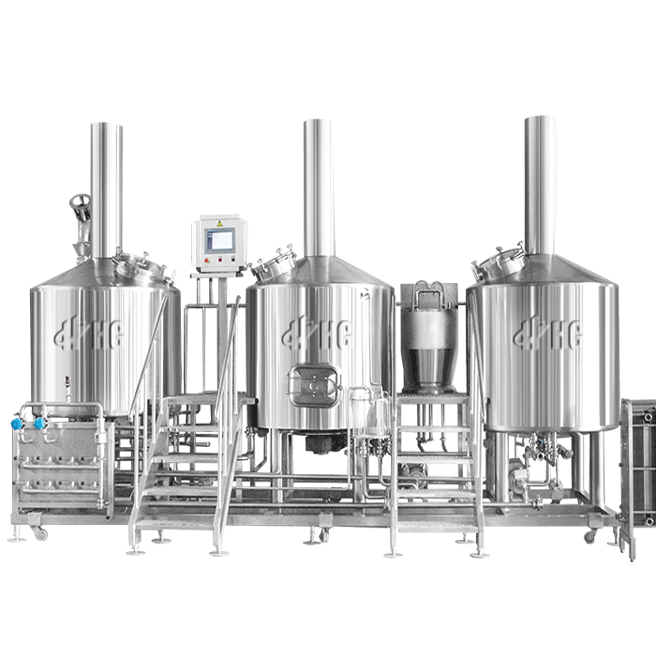
The transition from standard equipment to a bespoke Brewhouse allows for the removal of mechanical limits that slow down production cycles. In a 2024 industrial survey of 180 craft breweries, those using custom-engineered vessels reported a 22% reduction in total labor hours due to optimized piping layouts.
"Vessel geometry ensures that the liquid-to-grain ratio is maintained, preventing the 3% to 5% extract loss caused by uneven grain bed hydration in generic tanks."
This mechanical tailoring ensures that heating jackets are sized for the facility’s steam boiler capacity, allowing for a 1.5°C per minute ramp rate during step mashing. Such precision prevents over-saccharification, ensuring every batch hits the target final gravity with a 0.05 Plato margin of error.
| Efficiency Category | Generic Equipment | Custom-Designed System | Improvement |
| Mash Extraction | 82% - 85% | 94% - 97% | +12% Yield |
| Cooling Lag Time | 45 - 60 Minutes | 25 - 30 Minutes | 40% Faster |
| Water Consumption | 6:1 Ratio | 3.5:1 Ratio | 41% Less Waste |
Shrinkage, or the volume of wort lost during transfers between the kettle and fermenter, is significantly reduced through custom-fit manifold systems. Data from 2023 technical audits shows that bespoke piping reduces dead-space volume by 18%, reclaiming 20 to 40 liters of product per 10-barrel batch.
"Every liter of wort saved in the transfer lines is a direct increase in volume, as the energy and material costs are already spent."
By utilizing variable frequency drives (VFD) on all pumps, a custom system moves wort at a velocity that prevents shear stress and oxygen pickup. Keeping dissolved oxygen (DO) below 20 ppb during the hot-side transfer is required for maintaining a 180-day shelf life, which is difficult with mismatched pump and pipe diameters.
-
Tailored Lauter Rakes: Designed for specific grain bills, reducing the chance of a "stuck mash" by 90%.
-
High-Surface Heat Exchangers: Sized to drop wort from 98°C to 18°C in one pass using 15% less glycol.
-
Integrated Flow Meters: Provide real-time data on sparge water, ensuring the exact pre-boil gravity is met.
The customization of the whirlpool vessel, specifically the tangential inlet angle and floor pitch, determines the tightness of the trub cone. Research from 2025 brewing trials confirms that a bespoke whirlpool design can increase wort recovery by 4% while reducing protein solids by 22%.
"Lowering trub carryover into the fermenter improves yeast health, allowing for 3 additional re-pitches per yeast brick and saving $450 in lab costs per month."
A custom setup addresses unique spatial constraints, allowing for a workflow that minimizes forklift movement and raw material handling. Statistics from 150 installation sites show that a well-planned floor layout reduces the risk of accidents by 30% while increasing the batches managed in an 8-hour shift.
Managing energy through a vapor condenser or a stack heat exchanger turns waste heat from the boil into a resource for strike water. In a 2024 environmental study, breweries using custom energy recovery loops saw a 14% decrease in natural gas consumption, protecting the business from the volatility of energy markets.
The lifespan of the equipment is enhanced through the use of high-grade 304 or 316L stainless steel with custom-polished welds. Analysis of equipment lifecycles suggests that custom-built systems retain 60% of their resale value after five years, compared to just 35% for mass-produced units.
Integration of a centralized control panel with digital data logging allows the brewer to audit the temperature, pressure, and flow rate of every batch. This transparency makes it possible to identify a 1.5% efficiency drift in real-time, allowing for immediate mechanical adjustments that maintain peak performance.
Finally, the modular nature of custom designs allows for the addition of future vessels without re-engineering the entire utility grid. This foresight in the planning stage reduces future expansion CAPEX by 20%, as the steam and glycol headers are already sized for the facility's 5-year growth projection.