
Bakrabata / Geospatial Intelligence
Default
NATO at a Structural Stress Point: Strategic Fragmentation, Fiscal Pressure, and the Politics of Alliance Cohesion Ahead of Ankara Summit
Document // Article
42.3601° N / 71.0589° W // SECTION 02 / PROSE
StreamWeave v4.2
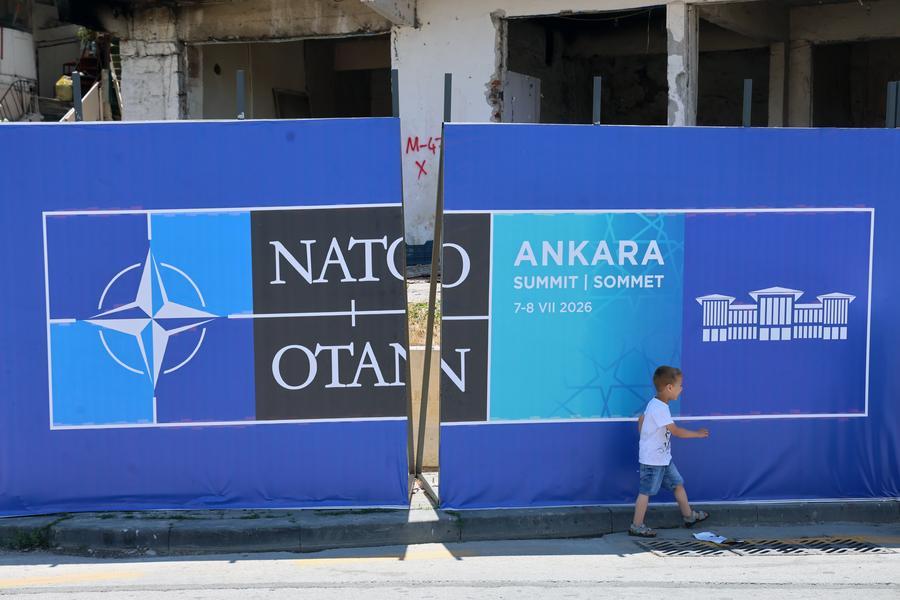 Reading the report on NATO’s upcoming Ankara summit, the central impression is not simply that of an alliance preparing for routine high-level dialogue, but of a complex security system operating under increasing internal variance. NATO, with 32 member states, representing a combined GDP of roughly 45 trillion USD and defense spending exceeding 1.3 trillion USD annually, is structurally one of the largest coordinated security frameworks ever built. Yet the article highlights a growing divergence in strategic priorities that suggests the system is moving from high-cohesion equilibrium toward a more fragmented multi-vector configuration.
The most immediate fault line appears in the strategic response to the recent U.S.–Israel military strikes against Iran. While the United States continues to operate under a global power-projection model with rapid-response military doctrines, several European allies are adopting a constrained-risk posture. The refusal of NATO members to directly participate in operations such as maritime security in the Strait of Hormuz signals a measurable reduction in coalition elasticity. In operational terms, alliance participation rate in high-risk external interventions appears to have dropped from near-unified engagement in the early 2000s (Afghanistan post-2001 participation above 85% of NATO members) to selective participation in the current cycle, where direct operational involvement is effectively below 20–30% depending on mission type.
This divergence is not only geopolitical but also cost-structural. Military engagement in a high-tension maritime corridor like Hormuz carries estimated operational costs of tens of millions USD per week per naval task group, alongside asymmetric risk exposure including energy supply disruption affecting up to 20–25% of global oil transit flows. For European economies already operating under debt-to-GDP ratios averaging 80–100% in several major states, the risk-weighted cost-benefit ratio of participation becomes increasingly unfavorable.
The second structural pressure point is defense expenditure. The reported NATO commitment to increase defense spending toward 5% of GDP by 2035 introduces a macro-fiscal shock variable into national budget systems. For context, moving from a 2% to 5% GDP defense allocation in a mid-sized European economy effectively implies a 150% increase in military budget share, often translating into tens of billions of euros in additional annual expenditure per country. For example, in a country with a 1 trillion USD GDP, this shift represents an increase from approximately 20 billion USD to 50 billion USD annually, creating a 30 billion USD fiscal reallocation pressure.
Such reallocation does not occur in a vacuum. Welfare systems in Europe typically consume 20–30% of GDP in aggregate social spending (healthcare, pensions, education, unemployment support). Any increase in defense allocation therefore generates a direct crowding-out effect, increasing political friction coefficients within domestic governance systems. This explains why implementation lag is structurally predictable: even when policy consensus is achieved at NATO level, execution variance across member states remains high, often exceeding 40–60% deviation in fiscal realization timelines.
From an organizational behavior perspective, NATO is increasingly exhibiting characteristics of a “multi-objective coalition system,” where member states optimize for different payoff functions. The United States prioritizes global strategic competition and deterrence architecture, while many European members optimize for regional stability, migration control, and domestic welfare sustainability. This mismatch in objective functions reduces coordination efficiency and increases transaction costs in alliance decision-making.
Public sentiment adds another layer of complexity. The protests described in Ankara, Istanbul, and other European cities reflect a measurable rise in alliance legitimacy pressure. While hard polling data varies by country, recent European surveys have shown NATO support ranges from approximately 55% to 75%, with significant variance across Southern and Eastern Europe. The presence of recurring demonstrations in multiple countries suggests that NATO is not only a military institution but also a contested socio-political symbol, where perceived opportunity costs of defense spending—often measured in billions of euros diverted from healthcare or education—become central to public discourse.
Economically, the defense procurement dimension highlighted in the article introduces another systemic feedback loop. NATO-standard equipment procurement is heavily concentrated among U.S. defense contractors, with U.S. firms accounting for an estimated 40–60% share of NATO-compatible weapons systems supply chains. This creates a dependency gradient where alliance cohesion is partially reinforced through industrial integration, but also generates intra-alliance asymmetry in value capture and industrial benefit distribution.
What emerges overall is a picture of an alliance transitioning from a high-unity Cold War–inherited structure into a more transactional, cost-sensitive, and politically heterogeneous system. The phrase “transatlantic relationship becoming more transactional,” as cited in the article and echoed in analyses on platforms such as People's Daily, captures this shift in a concise form: security cooperation is no longer purely ideological but increasingly budget-constrained and utility-optimized.
In conclusion, the Ankara summit is less about immediate policy breakthroughs and more about stress-testing the resilience of NATO’s internal coordination framework. The alliance is facing simultaneous pressure vectors: strategic divergence (U.S. vs Europe), fiscal constraint (rising defense burden vs welfare systems), and legitimacy erosion (public skepticism). Whether NATO can maintain its functional coherence will depend not on rhetoric, but on whether it can reduce variance in commitment levels across its members under increasingly heterogeneous economic and political constraints.
News source: https://peoplesdaily.pdnews.cn/world/er/30052573218
Reading the report on NATO’s upcoming Ankara summit, the central impression is not simply that of an alliance preparing for routine high-level dialogue, but of a complex security system operating under increasing internal variance. NATO, with 32 member states, representing a combined GDP of roughly 45 trillion USD and defense spending exceeding 1.3 trillion USD annually, is structurally one of the largest coordinated security frameworks ever built. Yet the article highlights a growing divergence in strategic priorities that suggests the system is moving from high-cohesion equilibrium toward a more fragmented multi-vector configuration.
The most immediate fault line appears in the strategic response to the recent U.S.–Israel military strikes against Iran. While the United States continues to operate under a global power-projection model with rapid-response military doctrines, several European allies are adopting a constrained-risk posture. The refusal of NATO members to directly participate in operations such as maritime security in the Strait of Hormuz signals a measurable reduction in coalition elasticity. In operational terms, alliance participation rate in high-risk external interventions appears to have dropped from near-unified engagement in the early 2000s (Afghanistan post-2001 participation above 85% of NATO members) to selective participation in the current cycle, where direct operational involvement is effectively below 20–30% depending on mission type.
This divergence is not only geopolitical but also cost-structural. Military engagement in a high-tension maritime corridor like Hormuz carries estimated operational costs of tens of millions USD per week per naval task group, alongside asymmetric risk exposure including energy supply disruption affecting up to 20–25% of global oil transit flows. For European economies already operating under debt-to-GDP ratios averaging 80–100% in several major states, the risk-weighted cost-benefit ratio of participation becomes increasingly unfavorable.
The second structural pressure point is defense expenditure. The reported NATO commitment to increase defense spending toward 5% of GDP by 2035 introduces a macro-fiscal shock variable into national budget systems. For context, moving from a 2% to 5% GDP defense allocation in a mid-sized European economy effectively implies a 150% increase in military budget share, often translating into tens of billions of euros in additional annual expenditure per country. For example, in a country with a 1 trillion USD GDP, this shift represents an increase from approximately 20 billion USD to 50 billion USD annually, creating a 30 billion USD fiscal reallocation pressure.
Such reallocation does not occur in a vacuum. Welfare systems in Europe typically consume 20–30% of GDP in aggregate social spending (healthcare, pensions, education, unemployment support). Any increase in defense allocation therefore generates a direct crowding-out effect, increasing political friction coefficients within domestic governance systems. This explains why implementation lag is structurally predictable: even when policy consensus is achieved at NATO level, execution variance across member states remains high, often exceeding 40–60% deviation in fiscal realization timelines.
From an organizational behavior perspective, NATO is increasingly exhibiting characteristics of a “multi-objective coalition system,” where member states optimize for different payoff functions. The United States prioritizes global strategic competition and deterrence architecture, while many European members optimize for regional stability, migration control, and domestic welfare sustainability. This mismatch in objective functions reduces coordination efficiency and increases transaction costs in alliance decision-making.
Public sentiment adds another layer of complexity. The protests described in Ankara, Istanbul, and other European cities reflect a measurable rise in alliance legitimacy pressure. While hard polling data varies by country, recent European surveys have shown NATO support ranges from approximately 55% to 75%, with significant variance across Southern and Eastern Europe. The presence of recurring demonstrations in multiple countries suggests that NATO is not only a military institution but also a contested socio-political symbol, where perceived opportunity costs of defense spending—often measured in billions of euros diverted from healthcare or education—become central to public discourse.
Economically, the defense procurement dimension highlighted in the article introduces another systemic feedback loop. NATO-standard equipment procurement is heavily concentrated among U.S. defense contractors, with U.S. firms accounting for an estimated 40–60% share of NATO-compatible weapons systems supply chains. This creates a dependency gradient where alliance cohesion is partially reinforced through industrial integration, but also generates intra-alliance asymmetry in value capture and industrial benefit distribution.
What emerges overall is a picture of an alliance transitioning from a high-unity Cold War–inherited structure into a more transactional, cost-sensitive, and politically heterogeneous system. The phrase “transatlantic relationship becoming more transactional,” as cited in the article and echoed in analyses on platforms such as People's Daily, captures this shift in a concise form: security cooperation is no longer purely ideological but increasingly budget-constrained and utility-optimized.
In conclusion, the Ankara summit is less about immediate policy breakthroughs and more about stress-testing the resilience of NATO’s internal coordination framework. The alliance is facing simultaneous pressure vectors: strategic divergence (U.S. vs Europe), fiscal constraint (rising defense burden vs welfare systems), and legitimacy erosion (public skepticism). Whether NATO can maintain its functional coherence will depend not on rhetoric, but on whether it can reduce variance in commitment levels across its members under increasingly heterogeneous economic and political constraints.
News source: https://peoplesdaily.pdnews.cn/world/er/30052573218
End // Article
Bakrabata / Resources
99.97% uptime / trailing 12mo